When it comes to older homes, you might face plumbing issues like corroded pipes or failing sewer lines. It’s essential to spot these problems early and address them with timely upgrades and maintenance. Regular professional plumbing inspections can save you from expensive repairs. Staying informed about these common issues and knowing how to prevent them will guarantee your home’s plumbing remains efficient and reliable. Let’s explore how you can safeguard your home’s plumbing system.
Key Takeaways
- Regularly inspect for corroded pipes and replace them with modern materials like PEX or copper to prevent leaks.
- Address pipe bellies by identifying negative slopes and replacing affected sections to maintain proper drainage.
- Use video camera inspections to detect tree root invasions in sewer lines, preventing blockages and backups.
- Upgrade outdated fixtures and connections to improve water efficiency and reduce utility costs in older homes.
- Schedule regular professional plumbing inspections to identify issues early and extend the lifespan of plumbing systems.
Corroded Pipes: Signs and Solutions
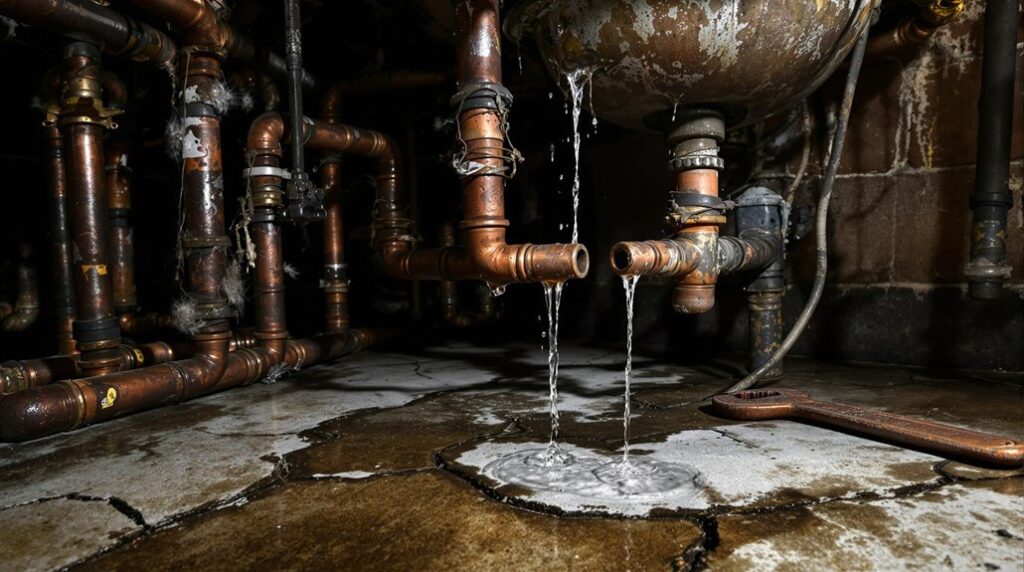
When you’re dealing with older homes, keeping an eye out for signs of corroded pipes is crucial. Discolored water—yellow, green, or brown—often signals rust and deterioration.
You should also watch for white, green, or red discoloration on pipes under sinks or in basements, as these indicate corrosion that could lead to leaks and costly water damage. An unexpected surge in your water bill might suggest hidden leaks due to corroded pipes.
Engage a licensed plumber for regular inspections; they can spot issues early, preventing expensive repairs. Consider replacing corroded pipes with modern materials like PEX or copper to improve water quality and reliability.
Identifying and Fixing Pipe Bellies
As homes age, the ground beneath them can settle, leading to a common plumbing issue known as pipe bellies. These occur when pipes shift downward, creating negative slopes that cause slow drains and frequent clogs.
To guarantee your home’s plumbing is in top shape, you should watch for signs like gurgling sounds, foul odors, and multiple fixtures draining slowly. These are red flags indicating a need for a professional assessment.
Regular plumbing inspections are essential to identify pipe bellies early, preventing more severe complications. If identified, solutions may involve excavation and replacing the affected sections or employing trenchless methods for minimal disruption.
Stay vigilant and promptly address any slow drains or unusual noises to maintain a well-functioning plumbing system.
Addressing Failing Sewer Lines
Dealing with failing sewer lines demands immediate attention due to the risk of foul-smelling wastewater backing up into your home.
Tree roots are notorious for invading sewer lines, especially in older homes, causing significant blockages. If you notice multiple slow drains, it’s a red flag indicating a partially blocked sewer line.
To prevent severe issues, schedule a plumbing inspection using video cameras. This technology allows you to identify cracks, breaks, or blockages early, providing a clear picture of your sewer line’s condition.
Trenchless sewer replacement techniques offer an effective solution with minimal disruption to your yard.
Upgrading Outdated Fixtures and Connections
Having addressed the essential issues of sewer lines, it’s equally important to focus on upgrading outdated fixtures and connections in older homes.
Modernizing your plumbing systems not only enhances water efficiency but also greatly reduces utility costs. New faucets and toilets can cut water usage by up to 30%, providing considerable savings.
Replacing worn-out connections can prevent leaks, which waste over 3,000 gallons annually per leaky fixture. It’s vital to switch out lead-soldered connections for lead-free alternatives to guarantee safe drinking water.
Installing low-flow showerheads and faucets further reduces water consumption. For best results, seek professional help to confirm compliance and safety.
These upgrades enhance home value, making your property more appealing to future buyers seeking modern, efficient systems.
Recognizing Hazardous Plumbing Materials
When addressing plumbing materials in older homes, identifying hazardous components is essential for maintaining a safe and efficient system.
Lead pipes, often found in homes built before 1978, can leach harmful lead into drinking water, posing significant health risks. Conducting lead testing is critical to guarantee your home’s safety.
Galvanized steel, common from the 1930s to the 1980s, tends to rust and corrode, leading to leaks and reduced water pressure. Replacing these with modern materials is advisable.
Also, check for polybutylene pipes, as they can become brittle and crack. Regular plumbing inspections are important for uncovering these issues, as older homes mightn’t comply with current building codes.
Confirm your home’s plumbing meets today’s safety standards to protect your family’s health.
Consequences of Poor Repairs and Maintenance
Identifying hazardous plumbing materials is just the first step in safeguarding your older home.
Poor repairs and maintenance can lead to persistent plumbing issues that escalate quickly. Unsecured pipes may leak, causing significant water damage. DIY fixes by previous owners often result in improperly installed sink traps, leading to drainage problems and potential exposure to harmful wastewater.
Ignoring maintenance tasks, like replacing worn-out washers, turns minor leaks into massive water wastage, inflating your utility bills. Inadequately maintained water heaters may pose risks of leaks or even dangerous explosions, especially when neglected for over a decade.
Addressing these issues promptly is vital. Consistent and thorough upkeep guarantees your home remains safe, efficient, and part of a community that values responsible homeownership.
Importance of Regular Professional Plumbing Inspections
Even if your older home seems to be functioning well, regular professional plumbing inspections are vital for maintaining its integrity.
Plumbing maintenance is important, especially in homes over 25 years old, where systems mightn’t meet current building codes.
Professional plumbing inspections can identify common plumbing issues like corroded pipes and leaks before they escalate into costly repairs, with inspection costs averaging around $575.
A professional plumber uses advanced tools, such as video cameras, to uncover hidden problems like blockages or outdated fixtures, saving you money on water bills and preventing significant damage.
By scheduling regular inspections, you extend the lifespan of your plumbing systems, avoiding emergency repairs that could cost thousands.
Trust in professional assessments guarantees safety and compliance.
Understanding the Cost of Plumbing Replacement
While evaluating the financial implications of plumbing replacement in older homes, it’s essential to contemplate the various factors that influence costs.
The cost to replace plumbing can range from $3,000 to $16,000, hinging on your choice of new piping materials and how easily accessible your water lines are. If your plumbing issues require updating multiple fixtures, be prepared for a significant increase in expenses.
Larger homes often incur higher costs due to more extensive systems and labor requirements. Difficult-to-reach areas also add to the challenge, increasing labor and time.
Preventative Measures for Common Plumbing Problems
Taking preventative measures is essential in maintaining the integrity of your plumbing system, especially in older homes. Regular inspections, ideally every 1-2 years, can identify plumbing issues in old systems, such as corroded pipes, before they become costly repairs.
Consider replacing outdated fixtures with water-efficient models to reduce leaks and lower water bills. To prevent slow drains, regularly clean drain traps, use mesh strainers, and avoid flushing inappropriate items.
Insulating exposed pipes in unheated areas helps prevent freezing and bursting during winter. Additionally, keep trees and large shrubs at a safe distance from sewer lines to minimize root intrusion risks.
These practical steps can safeguard your home from common plumbing problems, ensuring your system runs smoothly.
Frequently Asked Questions
How to Check Plumbing in an Old House?
Think of an old house’s plumbing as an ancient tree’s roots. To guarantee it’s thriving, embrace pipe inspection techniques.
Examine exposed pipes for corrosion or leaks using your senses. Employ leak detection methods, like listening for water sounds in silence. Test water pressure to reveal hidden weaknesses.
These practices not only safeguard your home but connect you to a lineage that values preservation and meticulous care. You’re its caretaker now.
What Kind of Plumbing Do Older Homes Have?
In older homes, you’ll often find plumbing systems with lead pipes, which can pose significant health risks due to lead contamination.
Galvanized steel was commonly used, but it’s prone to rust and corrosion, impacting water pressure and causing leaks.
As for drainage systems, they might be outdated, leading to blockages and inefficiencies.
It’s essential to assess these elements to guarantee your home remains safe and functional, providing peace of mind for you and your family.
Do Old Houses Need New Plumbing?
Yes, old houses often need new plumbing. Vintage plumbing materials, like galvanized steel, can corrode, so exploring pipe replacement options is essential.
Opt for copper or PEX for durability. Regular plumbing maintenance tips include checking for leaks and ensuring drains are clear.
Upgrading to modern materials improves safety, efficiency, and property value. By updating your plumbing, you’re ensuring your home remains a safe, welcoming space for years to come.
Why Do I Keep Having Plumbing Issues?
You’re dealing with a symphony of water woes likely due to frequent leaks, rusted pipes, and outdated fixtures.
These hidden gremlins can disrupt your home’s harmony. Addressing the root cause requires a proactive approach—replace rusted pipes and upgrade outdated fixtures to prevent future issues.
Engage a professional to perform a thorough inspection. It’s not just about fixing leaks; it’s about creating a reliable and welcoming environment for your home.
Conclusion
In the grand tapestry of homeownership, your plumbing system is the lifeline that keeps everything flowing smoothly. Don’t let it unravel. Regular inspections, prompt attention to unusual noises or slow drains, and upgrading outdated fixtures are your best allies. By taking these proactive steps, you’re not just preventing leaks and water damage; you’re weaving a future of peace and efficiency. Remember, a well-maintained plumbing system is the backbone of a happy, healthy home.