Like the mythical Hydra, drain problems can seem endless, but some DIY methods can help you tackle minor clogs. Start with a plunger or a drain snake for simple blockages. Try a natural solution of vinegar and baking soda. But these aren’t always foolproof. If your drains still gurgle or emit odors, it might be time to seek professional help. Discover when DIY methods fall short and what pros can do differently.
Key Takeaways
- Use a plunger for minor clogs, but apply only gentle pressure to avoid damaging pipes.
- Drain snakes effectively remove hair and food clogs but may scratch if used incorrectly.
- Avoid chemical cleaners due to potential pipe corrosion and masking of underlying issues.
- Persistent clogs and gurgling sounds indicate deeper problems needing professional intervention.
- Schedule regular professional drain cleanings to prevent serious blockages and maintain system health.
Common DIY Drain Cleaning Methods
When tackling drain clogs yourself, several methods can be effective if used correctly.
For DIY Drain Cleaning, start with a plunger to clear minor clogged drains. Apply gentle pressure to avoid pipe damage.
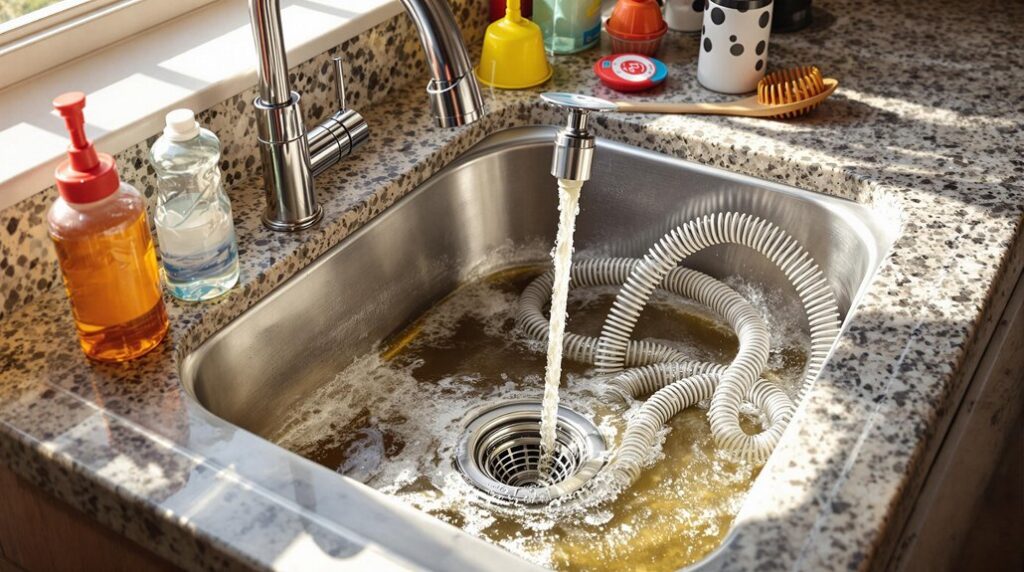
If clogs persist, try a drain snake; it’s excellent for dislodging hair or food particles but handle carefully to prevent scratching pipes.
For organic blockages like grease, boiling water can help—but steer clear of PVC pipes as heat weakens them.
For a natural approach, mix vinegar and baking soda to break down minor clogs. Pour the mixture down the drain, then flush with hot water.
Limitations of DIY Approaches
While DIY drain cleaning methods can be handy for minor clogs, they’ve distinct limitations that you should be aware of.
For instance, plungers and drain snakes can handle small blockages, but using too much force risks damaging pipes. Chemical cleaners might temporarily clear organic clogs but can corrode pipes over time and don’t solve the underlying issue. Boiling water works for grease clogs in metal pipes but isn’t safe for PVC. Knowing your plumbing type is essential to avoid damage.
Persistent clogs that resist DIY efforts suggest deeper problems. In such cases, it’s best to call a professional.
A professional plumber can address severe or recurring issues safely and effectively, preventing further complications. Recognize DIY limitations to know when expert help is needed.
Recognizing Persistent Drain Issues
Even though you might tackle minor clogs with DIY methods, recognizing persistent drain issues is crucial for preventing larger problems.
Start by observing if clogs recur frequently; this usually signals deeper issues within your plumbing systems that DIY efforts can’t fix.
Slow drainage paired with backups suggests significant blockages requiring professional drain cleaning.
Listen for gurgling sounds when using other fixtures, as they indicate trapped air due to a blockage—another sign for professional help.
Unpleasant odors from drains might hint at sewage problems, necessitating immediate expert intervention.
Ignoring these signs risks costly repairs, water damage, and unsanitary conditions.
Prioritize regular drain maintenance and seek professional assistance promptly to guarantee your home’s plumbing systems function smoothly and reliably.
Risks of Chemical Cleaners
Although chemical drain cleaners might seem like a quick fix for clogs, they pose significant risks to your plumbing system. They can corrode pipes over time, weakening your plumbing and leading to costly repairs.
Additionally, these cleaners often leave behind residue that can contribute to future clogs, defeating their purpose to prevent clogs. It’s essential to recognize that frequent use may mask an underlying issue that only a professional can effectively diagnose.
Some cleaners contain harsh acids, posing safety risks like skin burns and respiratory irritation. Also, they’re ineffective on non-organic materials, limiting their utility.
Instead of risking damage, consider calling a plumbing service for a thorough inspection and long-term solution, ensuring your system’s safety and efficiency.
Importance of Professional Intervention
Chemical cleaners can cause more harm than good, making it wise to contemplate professional intervention for your plumbing needs.
First, understand the importance of professional intervention when dealing with frequent clogs or slow drainage. These issues may signal significant underlying problems in your drain lines that require expert plumbing to resolve effectively. Experts possess specialized tools and knowledge to address these challenges, preventing further damage to your plumbing system.
Next, consider regular maintenance by professionals. This proactive approach extends your plumbing system’s lifespan and guarantees peak water flow.
Don’t ignore warning signs like water backups or overflowing toilets, as they demand immediate expert attention. Save yourself from unsanitary conditions and costly repairs by trusting professionals to maintain your plumbing infrastructure’s integrity.
Preventive Measures for Drain Maintenance
To effectively maintain your drains and prevent clogs, start by regularly cleaning drain stoppers and using hair strainers in bathroom sinks and tubs.
These preventive measures greatly reduce debris build-up. Install drain covers to catch hair and soap scum, ensuring ideal flow.
Schedule a professional drain cleaning service annually; this maintenance tip identifies potential issues early, preventing costly repairs.
Educate household members on properly disposing of waste—only flush water and dissolvable toilet paper to avoid clogged lines.
Remember, a proactive approach keeps your drainage system running smoothly and fosters a sense of responsibility within your home.
Proper Disposal Practices to Avoid Clogs
Ever wonder why your drains keep clogging despite your best efforts? Begin with proper disposal practices to maintain a clog-free kitchen sink and avoid foul odors.
First, always dispose of fats, oils, and grease (FOG) in the trash. These substances solidify, leading to significant clogs.
Next, prevent toilet blockages by avoiding non-dissolvable items like cotton swabs and dental floss. Educate your household about these critical practices.
Garbage disposals are for small food scraps—not actual garbage. Use strainers to catch hair and debris in sinks. Regularly clean drain stoppers to prevent buildup.
Only flush biodegradable materials like toilet paper to maintain ideal drainage. By adopting these steps, you’ll contribute to a smoothly functioning home, fostering a sense of community through shared responsibility.
Professional Equipment and Techniques
When tackling stubborn drain clogs, investing in professional equipment and techniques offers a clear advantage.
Begin by using specialized machines like the Ridgid K-1750 or K-40, designed to handle clogs efficiently without damaging your pipes. If your drain is clogged, inspect the pipes with a sewer camera and locator to pinpoint blockages precisely. This visual inspection is essential to understanding the nature of the clog.
Next, deploy a jetter utilizing high-pressure water to effectively clear grease and roots, guaranteeing a thorough cleanse.
While working, listen for changes in pitch, as this can signal progress and guide your adjustments.
Frequently Asked Questions
When Should You Not Use Drain Cleaner?
You shouldn’t use drain cleaner when dealing with recurring clogs, older pipes, or PVC, as these scenarios risk chemical reactions or damage.
For effective drain maintenance, avoid plumbing myths that promise quick fixes. Instead, opt for safe alternatives like a plunger or plumber’s snake.
If solid obstructions are the issue, chemical cleaners aren’t effective. Following these steps guarantees your plumbing system’s safety and functionality while fostering a sense of community with fellow problem solvers.
Do Baking Soda and Vinegar Really Work on Drains?
You’re wondering if baking soda and vinegar really work on drains. They do, to some extent.
Combine baking soda benefits with vinegar effectiveness for natural drain solutions. First, pour a cup of baking soda down the drain. Next, follow with a cup of vinegar. Let it fizz for 15 minutes. Finally, flush with hot water.
This DIY cleaning technique works best for minor clogs, but persistent issues may need a pro’s touch.
What Do Plumbers Recommend for Clogged Drains?
Did you know 80% of drain clogs can be resolved with proper tools?
Plumbers recommend using a plunger for minor obstructions, guaranteeing compatibility with your pipe materials.
Employ drain snakes for stubborn clogs, handling them carefully to prevent pipe scratches.
When organic blockages persist, chemical cleaners can help, but sparingly to avoid corrosion.
Regular drain inspections and maintenance keep issues at bay, and for severe cases, calling a pro guarantees safety.
Why Do Plumbers Say to Not Use Drano?
Plumbers advise against Drano due to plumbing risks and harmful chemical reactions.
For drain safety, explore Drano alternatives like baking soda and vinegar. First, pour half a cup of baking soda down the drain. Follow with a cup of vinegar. Let it sit for 15 minutes, then flush with hot water.
This method minimizes pipe corrosion and clogs. By connecting with these alternatives, you join a community prioritizing sustainable and safe solutions.
Conclusion
When your DIY efforts hit a wall, don’t hesitate—call in the pros. Ignoring persistent issues is like ignoring the storm clouds before a downpour; act before the flood. Professionals use advanced equipment to clear stubborn clogs and guarantee your drains flow smoothly. Schedule regular maintenance and practice proper disposal to prevent future problems. By doing so, you’ll save yourself from costly repairs and keep your drainage system in peak condition. Remember, prevention beats repair every time.