When you’re considering upgrading your home’s water heating system, tankless water heaters might catch your attention. They’re known for providing hot water on demand and improving energy efficiency, but there’s more to the story. With their compact design and longer lifespan, they seem appealing. However, initial costs and maintenance needs could be deterrents. Are they the right fit for your household’s needs and budget? Let’s explore the balance of benefits and drawbacks.
Key Takeaways
- Tankless water heaters provide endless hot water supply, eliminating depletion risk during high usage.
- They offer energy savings between 8% to 50% compared to traditional water heaters.
- Installation costs are higher, averaging over $3,000, with complex installation requirements.
- Compact design and longer lifespan of 15 to 20 years are significant advantages.
- Flow rate limitations may affect performance during simultaneous high-demand usage.
Understanding Tankless Water Heaters
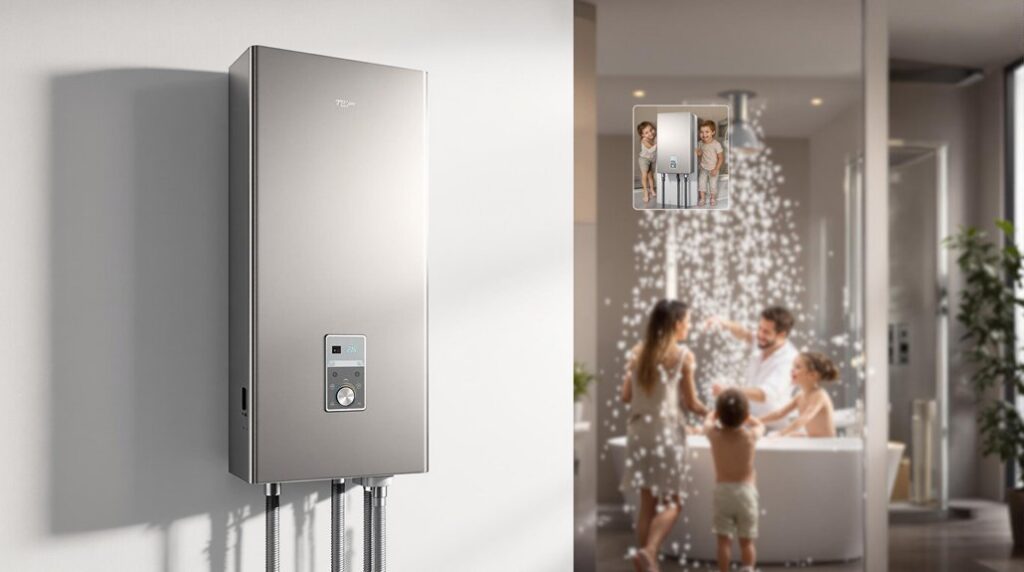
When you explore the concept of tankless water heaters, you’ll find that these innovative devices, often referred to as on-demand or instantaneous water heaters, offer a modern solution to the age-old need for hot water.
Unlike traditional water heaters, they heat water directly as it flows through, ensuring an endless hot water supply. Available in gas models, they boast energy efficiency rates between 80% and 99%, potentially slashing energy bills by 8% to 50%.
However, installation costs are significant, averaging over $3,000. Their lifespan, reaching 15 to 20 years, surpasses the 10 to 12 years of conventional heaters.
Be mindful of flow rates; simultaneous use may challenge these units unless properly sized, embodying both pros and cons of this technology.
Comparing Tankless and Traditional Water Heaters
Exploring the intricacies of tankless water heaters naturally leads to a comparison with their traditional counterparts.
Tankless water heaters heat water on demand, providing an endless hot water supply, whereas a traditional tank water heater stores 20 to 80 gallons, risking depletion during high usage.
Energy efficiency is a prime advantage of tankless models, offering 8% to 50% savings by eliminating standby energy losses.
However, installation costs are significantly higher, averaging over $3,000 compared to $900 for traditional systems.
Despite this, the longer lifespan (15 to 20 years) and compact design of tankless units offer substantial benefits.
Proper sizing is essential to meet your household’s hot water demand, which can complicate the heating process during installation.
How Tankless Water Heaters Operate
To understand how tankless water heaters operate, consider the direct heating process they employ. When you turn on a hot water tap, cold water flows into the unit, instantly triggering the tankless system. The water is heated on demand, ensuring you get instant hot water.
Tankless water heaters use either electric heating elements or gas burners to elevate the water temperature. Electric models rely on resistive heating elements, while gas models use burners paired with a heat exchanger to efficiently heat the water.
The energy efficiency of these systems is notable, as they eliminate the standby heat loss common with traditional storage tanks. However, factors such as incoming water temperature and flow rate can affect their ability to meet simultaneous demands, making performance tailored to your specific needs.
Advantages of Tankless Water Heaters
While traditional storage tank heaters have long been the norm, tankless water heaters present several compelling advantages that make them a superior choice for modern households.
First, they provide an endless supply of hot water on demand, ensuring you never run out during peak times.
Additionally, these systems are notably more energy-efficient than traditional tank models, reducing energy usage by 8% to 50%, which leads to long-term savings on your utility bills.
Their compact design allows flexible installation options, saving valuable space.
With a lifespan of 15 to 20 years, they outlast traditional tanks, which last about 10 years.
Disadvantages of Tankless Water Heaters
Although tankless water heaters offer many benefits, they come with several notable disadvantages that potential buyers should consider.
The initial cost is considerably higher, averaging over $3,000, compared to traditional tank heaters. You’ll face limited flow rates, which can lead to performance issues during simultaneous use, especially at peak hot water demands.
The complex installation may require expensive upgrades to plumbing and electrical systems. Additionally, incoming water temperature affects their energy efficiency; in colder climates, more powerful units are necessary.
Regular maintenance is essential to prevent mineral buildup and guarantee peak performance, costing between $45 to $200 annually.
These disadvantages could impact your decision, especially if you value seamless integration and cost-effective solutions in your home’s water heating system.
Choosing the Right Water Heater for Your Home
How do you decide on the best water heater for your home amidst various options? Start by evaluating your hot water demand. If you have high simultaneous usage, tankless water heaters might require multiple units.
Consider the local climate; colder areas need more powerful units to maintain energy efficiency. Installation costs are essential, with tankless options ranging from $800 to $3,500, so budget accordingly.
Examine your water quality, as hard water can cause scaling issues, necessitating a water softener. Decide between gas or electric models based on your home’s infrastructure.
For precise guidance, consult professionals and use water heater selector tools. This thorough assessment guarantees you choose a system that meets your needs and fosters a sense of belonging in your home.
Frequently Asked Questions
What Is the Downside to a Tankless Water Heater?
You might face some downsides with tankless water heaters, like higher upfront costs and installation challenges due to power supply upgrades.
Maintenance requirements, including regular descaling, can’t be ignored either.
Limited flow rates can impact user experience when running multiple appliances, and temperature fluctuations might affect comfort.
Noise levels may be higher, and although energy efficiency is a plus, lifespan comparison with traditional heaters isn’t always favorable.
Consider these factors carefully.
What Is the Downfall of a Tankless Water Heater?
Imagine upgrading your home, only to find your tankless water heater can’t handle simultaneous showers—it’s a common issue.
The initial investment is high, with installation challenges like upgrading plumbing and electrical systems. Maintenance costs add up as regular servicing prevents scaling and prolongs lifespan.
Flow rate limitations mean long wait times for hot water. Energy efficiency varies with climate impact, and cold temperatures can cause temperature fluctuations, affecting performance and comfort.
Why Avoid a Tankless Water Heater?
You might avoid a tankless water heater due to several factors.
Installation challenges and high upfront expenses can be intimidating. Maintenance costs add up, especially with scaling issues.
Limited flow rates can disrupt your usage patterns, particularly during peak times. In colder climates, water temperature struggles, requiring more power.
Additionally, they may not last as long as expected, and noise levels could be disruptive.
Consider energy efficiency and space requirements carefully.
Will My Electric Bill Go up With a Tankless Water Heater?
Your electric bill mightn’t skyrocket with a tankless water heater, thanks to its energy efficiency.
Although installation costs can be steep, the long-term savings are worth it.
Consider maintenance requirements to guarantee peak water flow and heating capacity. Lifespan expectations and usage patterns play a role, but size considerations and warranty options can ease concerns.
Think about the environmental impact too; tankless heaters offer a greener choice for the community.
Conclusion
When deciding on a water heater, consider that tankless models can offer energy savings between 8% and 50%, which adds up over time. While the initial cost exceeds $3,000, these units often outlast traditional tanks, providing value in the long run. However, their struggle to meet simultaneous demands and need for regular maintenance are critical factors. Ultimately, your choice should balance upfront expenses with long-term efficiency, considering your household’s specific hot water needs and usage patterns.