Did you know that fixing a leaky faucet can save up to 3,000 gallons of water per year? By making small changes, you not only conserve water but also reduce your utility expenses greatly. Simple adjustments in daily activities, like optimizing your water heater settings or washing only full loads, can yield substantial savings. Curious about other effective techniques to make a difference? Let’s explore how you can transform your water usage habits for maximum efficiency.
Key Takeaways
- Install low-flow showerheads to reduce water usage by 2.5 gallons per minute.
- Embrace shorter showers, ideally under 5 minutes, to save up to 1,500 gallons annually.
- Upgrade to ENERGY STAR-certified appliances for significant water and energy savings.
- Fix leaks promptly to prevent wasting over 3,000 gallons of water each year.
- Lower water heater thermostat to 120°F for reduced energy costs.
Change Your Bathroom Habits
When it comes to changing your bathroom habits for water conservation, small adjustments can make a big difference. By changing your bathroom habits, you can save water and money.
Installing low-flow showerheads reduces water usage by 2.5 gallons per minute, helping you conserve water. Embracing shorter showers, ideally under 5 minutes, further reduces your water use by up to 1,500 gallons annually.
Fixing leaks promptly prevents wasting over 3,000 gallons of water each year. Turning off the tap while brushing teeth saves 200 gallons monthly, contributing to lower utility bills.
Upgrading to water-efficient toilets saves up to 40% more water. These strategies not only conserve resources but also foster a sense of community responsibility, helping everyone feel part of a larger conservation effort.
Check Your Toilet for Leaks
Detecting toilet leaks is essential for effective water conservation, as these leaks can waste over 200 gallons daily, leading to higher water bills.
To check for leaks, add a few drops of food coloring into your toilet tank, wait 10-15 minutes, and see if the color appears in the bowl without flushing. This simple routine leak check can prevent substantial water waste and help save water.
If a leaking toilet is discovered, contact a professional plumber immediately to fix the issue, reducing water usage and ensuring your water bill doesn’t skyrocket.
Regularly inspecting and maintaining your toilet not only contributes to water conservation but also leads to substantial savings, reinforcing your commitment to sustainable living and responsible resource management.
Replace Old Water-Using Appliances
Upgrading your old water-using appliances can drastically cut down your water consumption and utility expenses. By replacing outdated models with ENERGY STAR-certified washing machines, you can save up to 20 gallons per load, leading to lower water bills.
Similarly, an ENERGY STAR-certified dishwasher can conserve about 2 gallons per cycle, adding up to 300 gallons yearly without pre-rinsing.
Consider installing water-efficient appliances like WaterSense-labeled low-flow toilets, which save an average of 13,000 gallons annually, translating to $140 in savings.
Tankless water heaters use up to 34% less energy than traditional tanks, heating water on demand.
These upgrades aren’t just about saving water; they promise significant long-term savings on utility bills, making them a smart investment for anyone looking to belong to a sustainable community.
Be a Water-Savvy Gardener
While aiming to be a water-savvy gardener, understanding the importance of timing and technique is essential for efficient water use.
Water your plants early in the morning to minimize evaporation, reducing water loss and saving on utility bills. Adjust sprinklers to target only your grass, avoiding wasteful irrigation of sidewalks and driveways, which can squander up to 50% of your water.
On windy days, hold off on watering to prevent evaporation and drift. Incorporate mulch to limit soil moisture evaporation, reducing the need for frequent watering by up to 30%.
Additionally, conserve water by sweeping driveways and patios instead of using hoses.
Optimize Your Water Heater Settings
When aiming to optimize your water heater settings, it’s essential to understand the impact of temperature adjustments and energy efficiency on your utility bills.
By lowering your water heater’s thermostat from 140°F to 120°F, you can save hundreds annually on energy costs while still enjoying adequate hot water.
Consider switching to an ENERGY STAR®-certified water heater, which uses up to 34% less energy, considerably lowering your utility bills over time.
Insulating the first six feet of both hot and cold water pipes connected to the water heater reduces heat loss, ensuring greater efficiency.
Additionally, regularly maintain your water heater to enhance its lifespan and energy efficiency.
An Energy Guide sticker can help you evaluate your current model’s efficiency and potential upgrades.
Wash Only Full Loads
Maximizing efficiency in water usage is simpler than you might think with a single habit change—washing only full loads. By committing to wash full loads, you can save up to 3,000 gallons of water annually.
Modern washing machines are designed to adjust water levels automatically, meaning full loads optimize water usage and conserve water. Dishwashers typically use about 5 gallons per load, whereas hand-washing might consume considerably more.
Waiting to wash until you have a full load not only saves water but also reduces energy costs associated with heating water for smaller loads. This habit helps lower utility bills and supports a more sustainable lifestyle.
Adjust Your Kitchen Water Use
Though it might seem minor, adjusting your kitchen water use can greatly impact your overall water consumption.
Modern dishwashers are efficient appliances, using only 5 gallons per load compared to hand-washing’s 9 to 27 gallons. By choosing a dishwasher, you’re embracing easy ways to save water and lower utility bills.
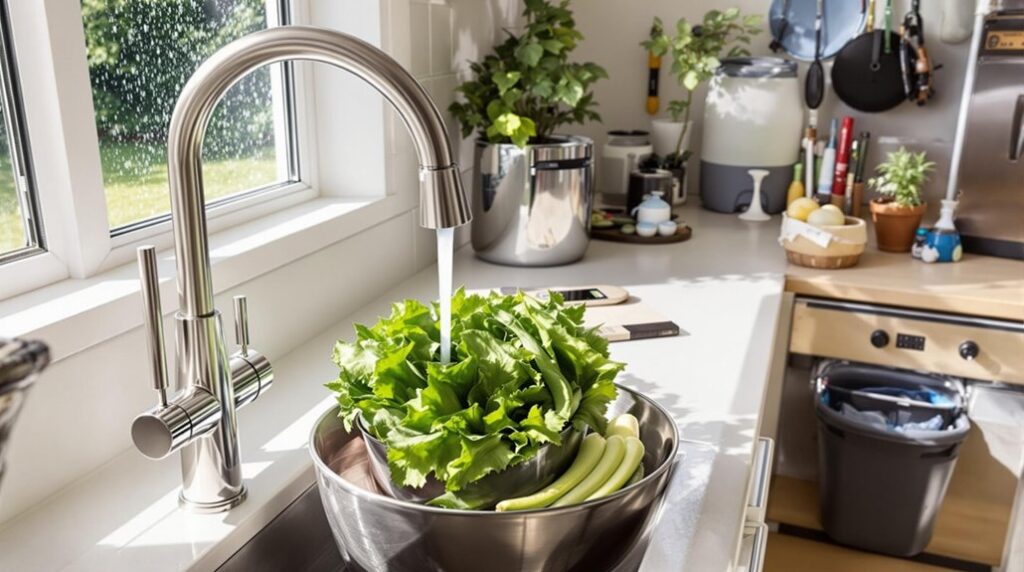
For cold water, keep pitchers in the fridge to reduce unnecessary water usage. Rinse vegetables in a pan of clean water instead of under the tap to conserve water effectively.
Prevent grease and oil from clogging drains by using a compost bin, avoiding excessive water use for clearing blockages.
When washing clothes, adjust settings for smaller loads or use a high-efficiency washer to further reduce water usage.
Frequently Asked Questions
How Can I Decrease My Water Bill?
To decrease your water bill, start by installing water-efficient appliances and low-flow fixtures.
Use smart irrigation systems and xeriscaping techniques for outdoor spaces, ensuring mindful water usage.
Implement rainwater harvesting and greywater recycling to maximize resource efficiency.
Regularly check for leaks with detection methods.
Adjust to seasonal watering schedules and engage in conservation awareness programs.
These evidence-based strategies foster a community of sustainability, offering significant savings and environmental benefits.
What Runs Your Electric Bill up the Most?
Your electric bill can skyrocket faster than a rocket launch if you don’t manage energy efficiently.
Use energy-efficient appliances and smart thermostats to control seasonal temperature settings. Unplug devices to combat phantom energy. Opt for LED bulbs over high-energy lightbulbs.
Regular HVAC maintenance and proper water heater settings are essential. Daily energy habits, like power strip management and effective home insulation, can greatly reduce costs.
Join the savvy savers club with these strategies!
How to Save the Most on Utilities?
To save the most on utilities, embrace water efficient appliances and energy efficient lighting, reducing consumption greatly.
Use rainwater harvesting and smart irrigation systems to conserve water.
Implement xeriscaping techniques with drought resistant plants to cut water use.
Install low flow fixtures and guarantee regular plumbing maintenance to prevent waste.
Greywater recycling is another effective strategy.
Engage with community conservation programs to share resources and foster a sense of belonging while saving money.
Which of the Following Practices Can Help Reduce Your Monthly Utility Bill?
You’re part of a community that values environmental responsibility, so let’s explore.
Water-efficient appliances and low-flow fixtures reduce usage considerably.
Rainwater harvesting and greywater systems reuse precious resources, while xeriscaping gardens and smart irrigation adapt to nature’s rhythm.
Drip irrigation and seasonal adjustments guarantee your landscape thrives with minimal waste.
Leak detection cuts unnecessary loss, promoting true water conservation.
These practices all contribute to lowering your monthly utility bill effectively.
Conclusion
Imagine your utility bill shrinking as you embrace water-saving habits. By fixing leaks, you can save up to 10% on your bill, while replacing old appliances with water-efficient models can cut water use by 20%. Shortening your showers to under five minutes alone can save gallons each day. Picture a lush garden thriving with strategic morning watering and mulch, not excess water. These changes aren’t just good for your wallet; they’re a step towards a sustainable future.